
Our actions have both direct and indirect impacts on the environment. Therefore, we strive to portray our company as environmentally conscious, aiming to minimize energy usage. Environmental preservation is a top priority across all our business activities. Despite our efforts, spills can occur during the storage and transportation of chemicals and petroleum products. It is our duty to implement preventive safety measures to mitigate this risk. Apart from consuming energy, water, various raw materials, and construction materials, our facilities also produce wastewater, waste, and air pollutants.
Our primary focus is on reducing our environmental impact. Within our group of companies, environmental considerations are a fundamental aspect of our HSSE management system. We are dedicated to utilizing energy and resources responsibly and fostering environmental consciousness among employees in alignment with the HSSE Policy to minimize adverse effects. Local operations at our tank terminals adhere to our comprehensive Energy Saving Guideline to identify potential energy savings and implement policies to enhance energy efficiency. To assess our contribution to climate change, our parent company, Amo Storage Inc, calculates the group's carbon dioxide (CO2) footprint. Some of our subsidiaries offer customers the option to participate in climate protection initiatives aimed at safeguarding the environment through carbon capture.
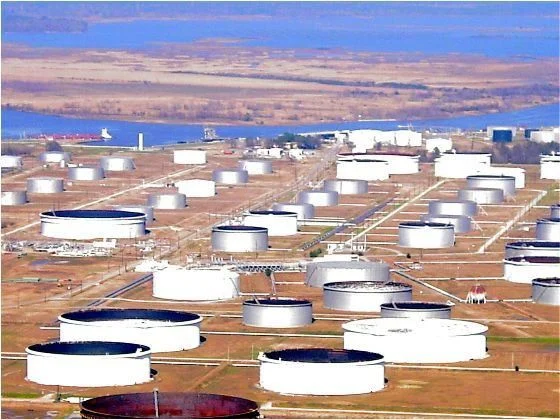
Our goal is to reduce energy consumption through the implementation of energy-saving initiatives, enhancements to facilities and processes, and raising awareness among staff about energy-saving practices. Amo Storage Inc utilizes both direct and indirect energy sources to operate its offices, facilities, sites, vessels, and equipment. Direct energy sources include heating oil, natural gas, and fuel for boilers, pumps, road tankers, bunker ships, and vehicles. Indirect energy, primarily electricity, powers computers in our global offices, product pumps, lights at tank terminals, hydrant systems, and aviation fueling station illumination. Additionally, we utilize imported steam and district heating to a lesser extent as supplementary indirect energy sources.

Our objective is to decrease energy consumption by enhancing staff knowledge, implementing process and facility enhancements, and establishing energy-saving initiatives. Amo Storage Inc utilizes both direct and indirect energy sources to operate its offices, facilities, sites, vessels, and equipment. Direct energy usage includes natural gas, heating oil, and fuel for pumps, boilers, bunker ships, operational vehicles, and road tankers. Indirect energy consumption involves computers in global offices, product pumps, lights at tank terminals, hydrant systems, and lighting at aviation fueling sites, primarily relying on electricity.
We also utilize district heating and, to a lesser extent, imported steam as additional sources of energy. Environmental stewardship is a primary focus in all our endeavors. We conduct annual assessments of global consumption and are committed to the efficient utilization of all resources. Our employees are encouraged to minimize waste and wastewater generation. The principles of "reduce, reuse, recycle, and recover" (the "4 Rs") form the foundation of our waste and wastewater management approach. Water is a precious resource, with its significance further underscored by climate change and the resulting droughts, particularly affecting the most vulnerable nations.
It is crucial for us to minimize our negative impact on water quality and efficiently manage the water required for our operations. While our activities generally do not require significant water intake, water is primarily used at our tank terminals for tank cleaning, hydrostatic testing, and heating purposes. To address the high water demand, we have integrated water management into our Energy Saving Program to decrease water usage. Additionally, we are exploring the potential of utilizing recycled water for industrial purposes instead of relying solely on fresh drinking water.